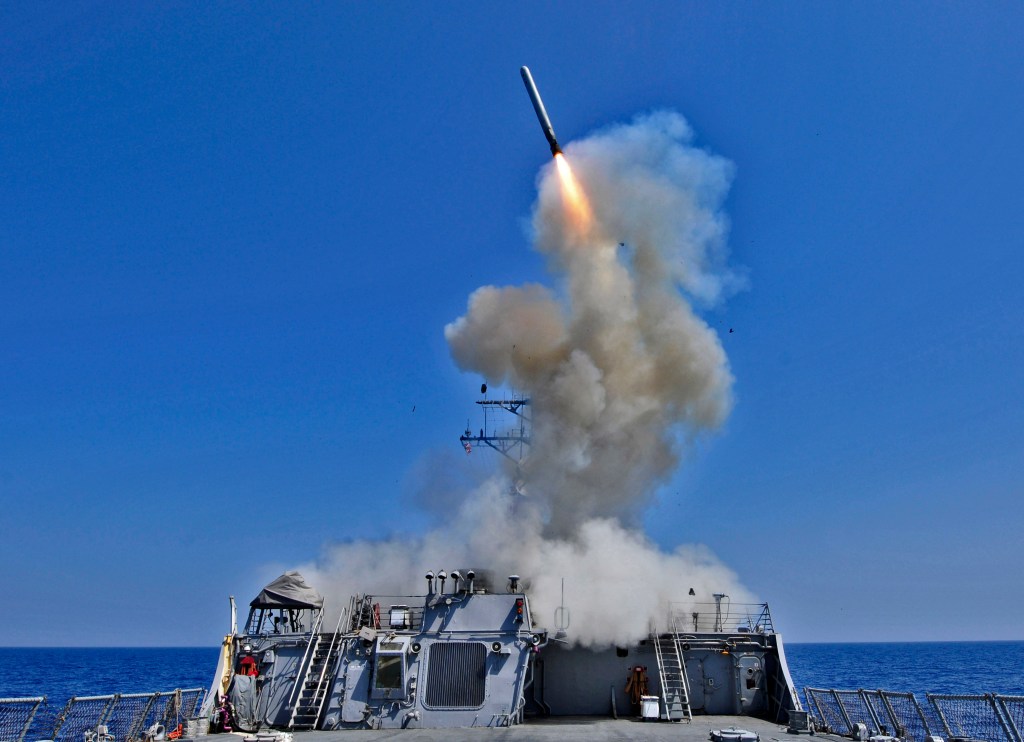
Two flight tests by the Navy and Raytheon in January saw a Tomahawk use targeting data supplied by various platforms to hit a moving ship target (MST). “In the first test, a Tomahawk Block IV cruise missile fired from the destroyer USS Kidd flew a pre-planned mission until a surveillance aircraft sent real-time target information to the Joint Network Enabled Weapons Mission Management Capability (JNEW-MMC) located at Naval Air Warfare Center – Weapons Division (NAWC-WD), China Lake,” said a Raytheon news release. “The JNEW-MMC provided updated data to the missile in flight before it successfully struck the MST.”
In the second test, the Kidd launched another Tomahawk Block IV missile on a “call-for-fire” mission in support of shore-based Marines staged on San Nicolas Island, California. “Using GPS navigational updates, the missile performed a vertical dive to impact on San Nicolas Island, scoring a direct hit on the target designated by the Marines,” Raytheon said.