Without solid training options, mysterious Cyber Command remains work in progress
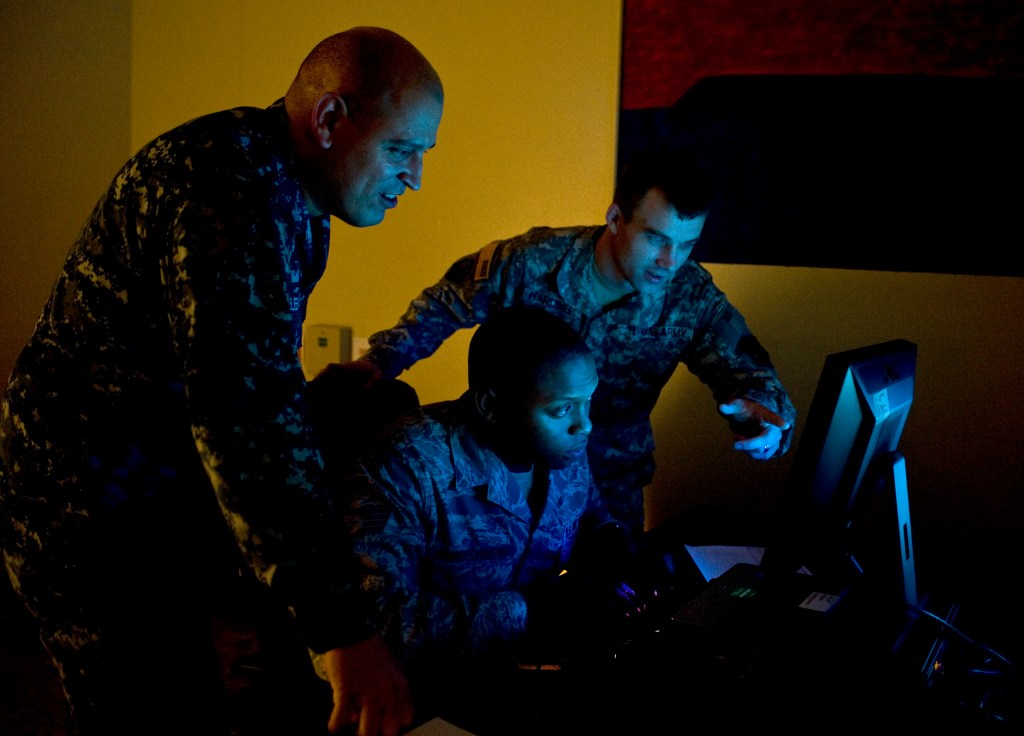
U.S. Navy Petty Officer 1st Class Joel Melendez, Naval Network Warfare Command information systems analysis, U.S. Air Force Staff Sgt. Rogerick Montgomery, U.S. Cyber Command network analysis, and U.S. Army Staff Sgt. Jacob Harding, 780th Military Intelligence Brigade cyber systems analysis, analyze an exercise scenario during Cyber Flag 13-1, Nov. 8, 2012, at Nellis Air Force Base, Nev. Cyber Flag strategically focuses on exercising the command’s mission of operating and defending the Department of Defense networks across the full spectrum of operations against a realistic adversary in a virtual environment. (U.S. Air Force photo by Senior Airman Matthew Lancaster)

The military’s demand for cyber capabilities is soaring. Defensive and offensive operations, including those targeting the Islamic State group, are occurring with greater frequency. There’s talk of elevating U.S. Cyber Command’s profile within the Defense Department. And yet six years after its creation, the organization does not have a training environment for large-scale exercises and to evaluate the readiness of its force.

Andrew Tilghman is the executive editor for Military Times. He is a former Military Times Pentagon reporter and served as a Middle East correspondent for the Stars and Stripes. Before covering the military, he worked as a reporter for the Houston Chronicle in Texas, the Albany Times Union in New York and The Associated Press in Milwaukee.