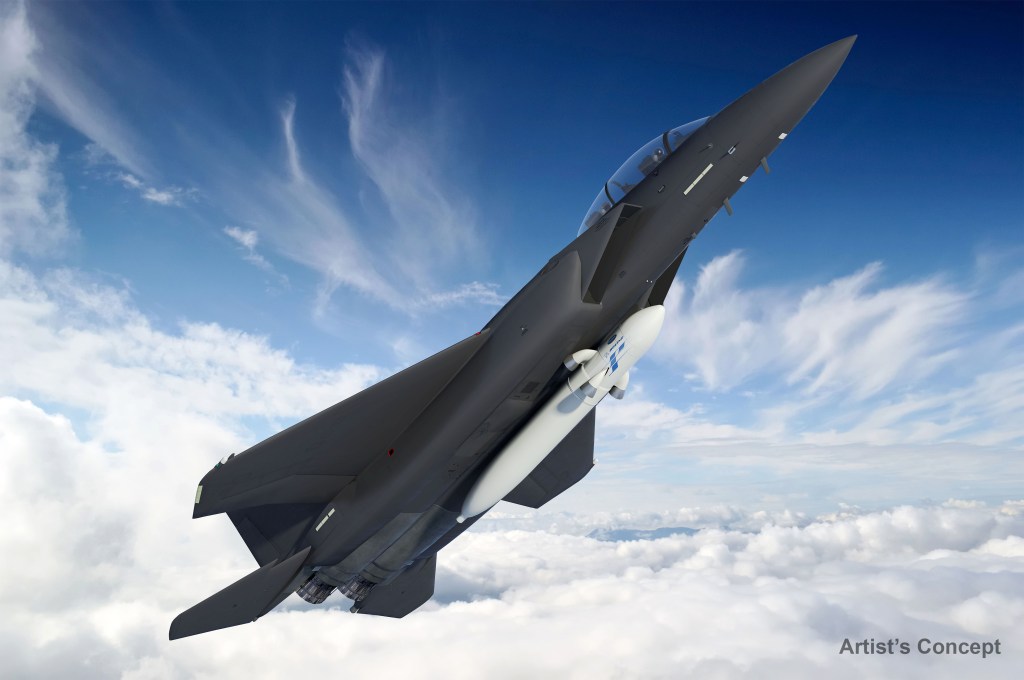
DARPA says it’s making progress on its project for aircraft-launched satellites.
The ambitious Airborne Launch Assist Space Access (ALASA) program aims to launch 100-pound satellites into low Earth orbit (LEO) on 24 hours notice, and for less than $1 million per launch.
“ALASA seeks to overcome the limitations of current launch systems by streamlining design and manufacturing and leveraging the flexibility and re-usability of an air-launched system,” said ALASA program manager Mitchell Burnside Clapp in a DARPA news release. “We envision an alternative to ride-sharing for satellites that enables satellite owners to launch payloads from any location into orbits of their choosing, on schedules of their choosing, on a launch vehicle designed specifically for small payloads.”
Phase 1 of the project produced three viable designs, DARPA said. In March 2014, Boeing won the prime contract for Phase 2, which will focus on quick mission-planning software and advanced propulsion. “Perhaps the most daring technology ALASA seeks to implement is a new high-energy monopropellant, which aims to combine fuel and oxidizer into a single liquid,” said DARPA. “If successful, the monopropellant would enable simpler designs and reduced manufacturing and operation costs compared to traditional designs that use two liquids, such as liquid hydrogen and liquid oxygen.
The first demonstration flight is slated for late 2015, followed by the first orbital test launch in the first half of 2016. Depending on test results, there could be 11 more demonstration launches through summer 2016.