On the same day that Apple CEO Tim Cook said in an open letter that the company would not comply with government efforts to break into the phone of an accused terrorist, one former military leader promised a bigger discussion of Islamic State terrorism and cybersecurity is yet to come.
On Feb. 17 Cook called an FBI directive to break into the iPhone of one of the San Bernardino, California, shooters “an overreach by the U.S. government,” and wrote that the government effectively wants “a backdoor to the iPhone…something we consider too dangerous to create.”
“The government is asking Apple to hack our own users and undermine decades of security advancements that protect our customers — including tens of millions of American citizens — from sophisticated hackers and cybercriminals,” the letter said.
It’s the start of a slippery and frightening slope, according to Adm. James Stavridis, former Supreme Allied Commander of Europe and now dean of Tuft University’s Fletcher School of Law and Diplomacy.
“Today we see Apple refusing to crack the code on the cellphone shown here,” Stavridis, projecting an image of the San Bernardino shooters, said at West 2016 in San Diego, California. “This is going to be a major debate in world of cyber, and it emanates from the kind of activity that the Islamic State is bringing around the world, including most recently in Istanbul where they blew up a group of tourists in front of the Blue Mosque.”
The San Bernardino shooters, believed to be affiliated with the Islamic State terror group, represent a growing and evolving security threat that requires an arsenal of capabilities to fight — including technology and cyber operations.
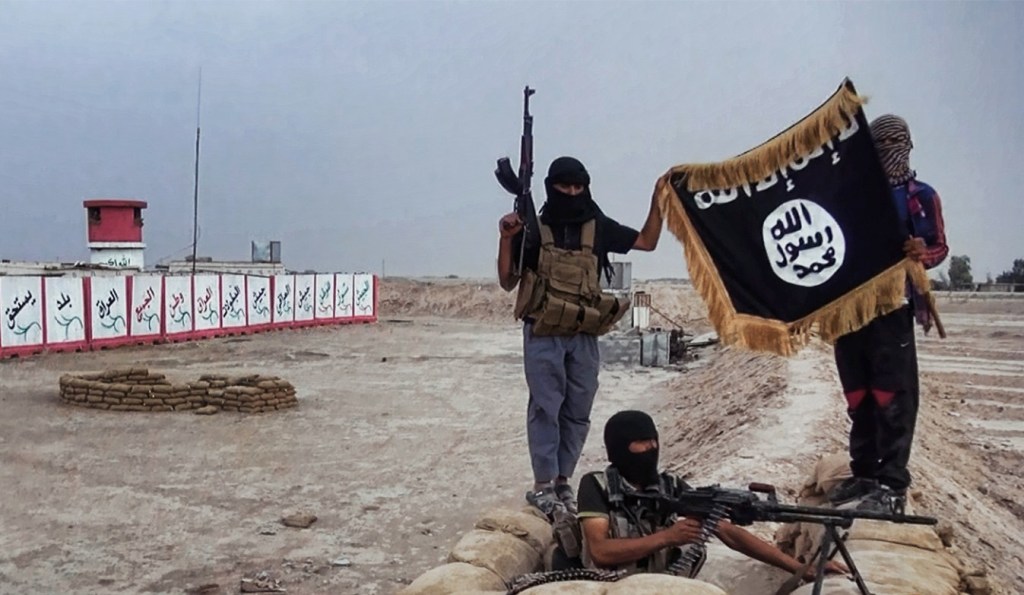
“This kind of violent extremism, some of which comes from radicalized Islam and some of which comes from other issues, is very salient in our world today,” Stavridis said. “ISIS different — they raise money like a machine and have become experts at branding and marketing. Two years ago nobody could have picked [their] flag out of a lineup, but today it’s most downloaded image on the World Wide Web. And we see the global reach expanding,” including in attacks such as the downing of a Russian jet leaving Egypt, the Paris attacks and a recent suicide bombing in Lebanon.
SHOW REPORTER: See more from West 2016.