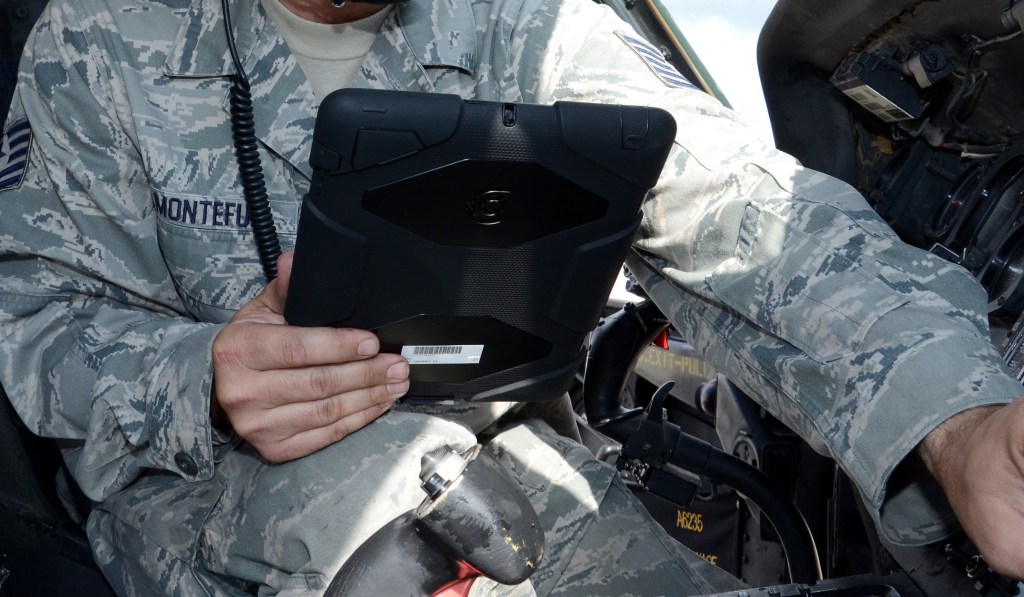
It is widely accepted that ruggedized tablets are becoming the military’s mobile platform of choice. Nonetheless, a few hurdles remain on the road to more complete adoption. While commercial acceptance of tablets already is well established, the military sets a higher bar in some regards.
Some see the foremost sticking point as being essentially doctrinal. As with any new technology, broad-based adoption depends to some degree on having a firm agreement on the rules of the road. The military services are not quite there yet.
“It is just too ugly right now. No one has common definitions, everyone has their own authority and their own checking points, their own things going on,” said Brad Curran, industry analyst with Frost & Sullivan Aerospace and Defense. “The main concern is always security, and when you have all these different programs, you inevitably end up with holes.”
To the extent that uniform policies will help to tighten security, likewise will they speed tablet adoption across the services.
Find out more about how tablets are changing the military with this free white paper.
One further variable involves the networks that will support military-grade tablets in their diverse tasks. As nimble as these devices may be, and no matter how versatile, their functionality and effectiveness will always depend on the communications networks to which they are attached.
The challenge here is that the further out one gets on the tactical edge, the more complicated it becomes to deliver a robust and consistent network capability. This isn’t strictly a tablet problem, but it’s an issue that will need to be resolved, and the military has proven itself well aware of this. As diverse efforts play out to bring stable connectivity to personnel in combat areas, broader tablet adoption will come that much closer.