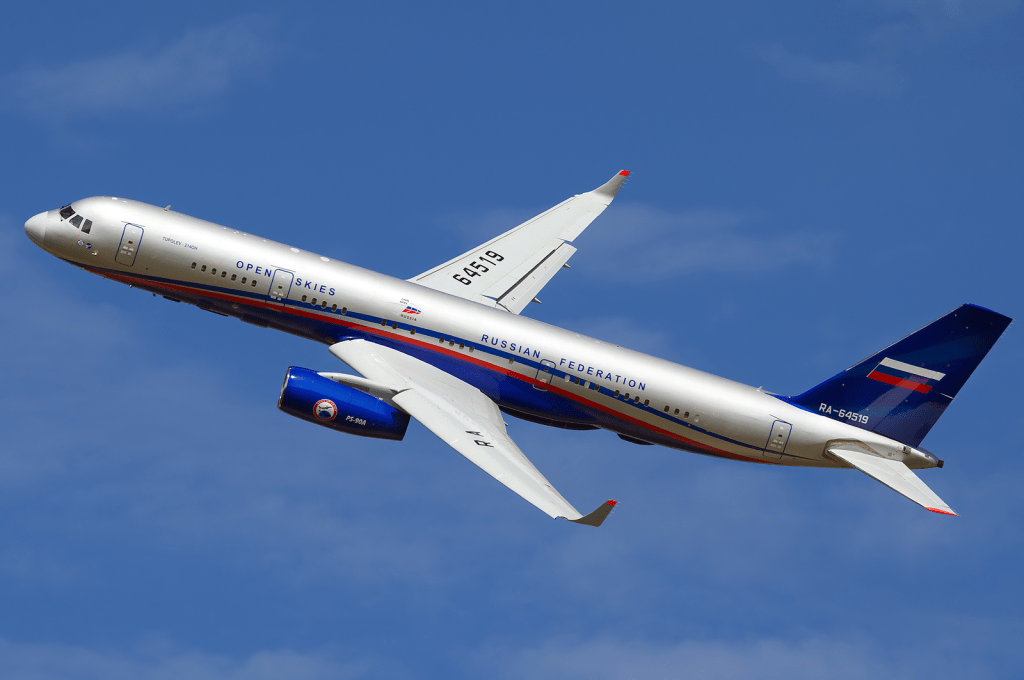
Russia on Feb. 23 filed a request for permission to fly unarmed aircraft carrying high-powered sensors over the U.S., purportedly as part of 2002’s multilateral Treaty on Open Skies, according to published reports.
Under Open Skies, members who signed the treaty are allowed to conduct unarmed missions in a bid to promote transparency and ensure compliance with arms agreements, among other reasons. But Russia’s request comes amid heightened tensions between the White House and the Kremlin over the Syrian war. It also coincides with Russia, according to a State Department compliance report, “failing to meet all its obligations under the treaty,” CBS reported.
With the U.S.-Russia relationship as frigid as it’s been since the end of the Cold War, some government officials are emphasizing their concern about what Russia might be doing with the intelligence collected during the surveillance flights.
In a letter written earlier this year to Rep. Mike Rogers, R-Ala., chairman of a House subcommittee on strategic forces, Adm. Cecil Haney, commander of U.S. Strategic Command, expressed alarm.
“The treaty has become a critical component of Russia’s intelligence collection capability directed at the United States,” Haney wrote. “In addition to overflying military installations, Russian Open Skies flights can overfly and collect on Department of Defense and national security or national critical infrastructure…the vulnerability exposed by exploitation of this data and costs of mitigation are increasingly difficult to characterize.”
LtGen Vincent Stewart, director of the Defense Intelligence Agency, also told Congress last year that “the Open Skies construct was designed for a different era,” and that he, too, is concerned — but said any further discussion would need to be behind closed doors, away from the public.
Pentagon officials are downplaying the potential for malicious intent in Russia’s latest Open Skies request.
“We have to remember that while we have pretty good intelligence on a lot of the world, a lot of other countries don’t necessarily have that great of intelligence on us,” Navy Capt. Jeff Davis, a Pentagon spokesman, said Feb. 22, according to the Washington Post. “So, in the interest of transparency and [avoiding] miscalculation on their part, sometimes it’s worthwhile to allow them to have a look at what you’re doing or what you’re not doing.”