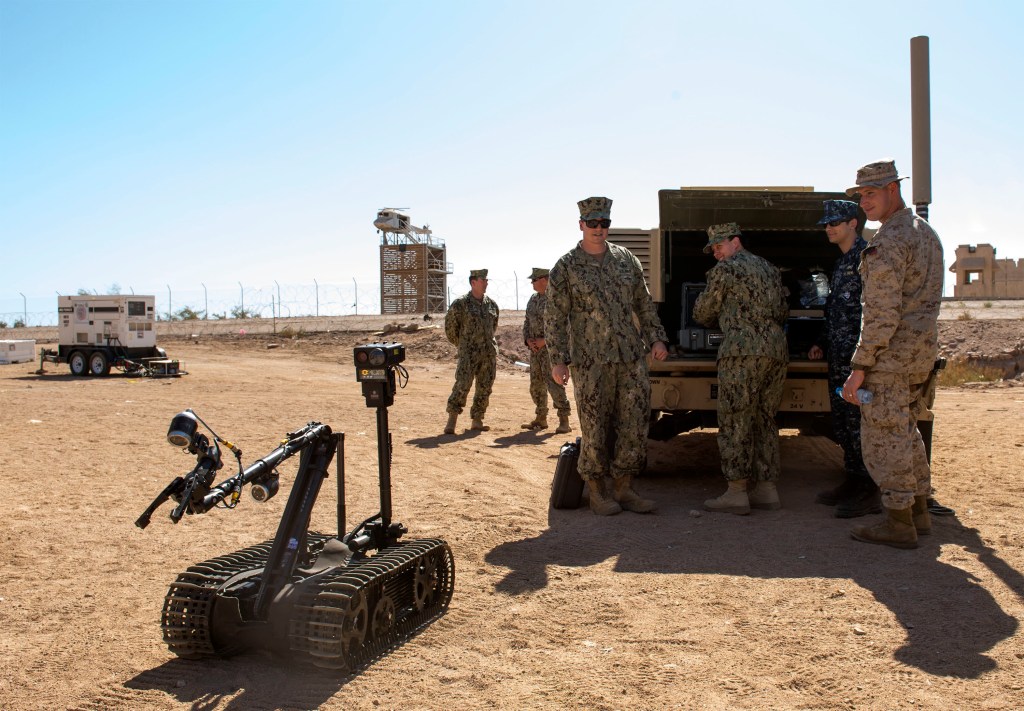
Rockwell Collins will provide 2,000 GPS receivers for Navy explosive ordnance disposal robots.
Rockwell Collins will provide its MicroGRAM GPS receivers to Neya Systems and Northrop Grumman, for integration into Neya’s Autonomous Behavior Capability Module, according to a Rockwell Collins news release. The module is part of Increment 1 of the Naval Surface Warfare Center’s Advanced Explosive Ordnance Disposal Robotic System (AEODRS).
“MicroGRAM provides the Navy’s AEODRS program the small, embedded, secure GPS necessary to ensure mission success,” said Mike Jones, vice president of Rockwell Collins’s Communication, Navigation and Electronic Warfare division. “MicroGRAM continues to be selected for a variety of military platforms as the need to protect against jamming and spoofing threats is growing rapidly.”
MicroGRAM, which is a Selective Availability Anti-spoofing Module (SAASM) device, complies with new Department of Defense requirements that GPS devices be secure.
“The use of unprotected commercial non-SAASM GPS devices has inherent vulnerabilities which introduce a false sense of situational awareness on the battlefield,” Jones said.